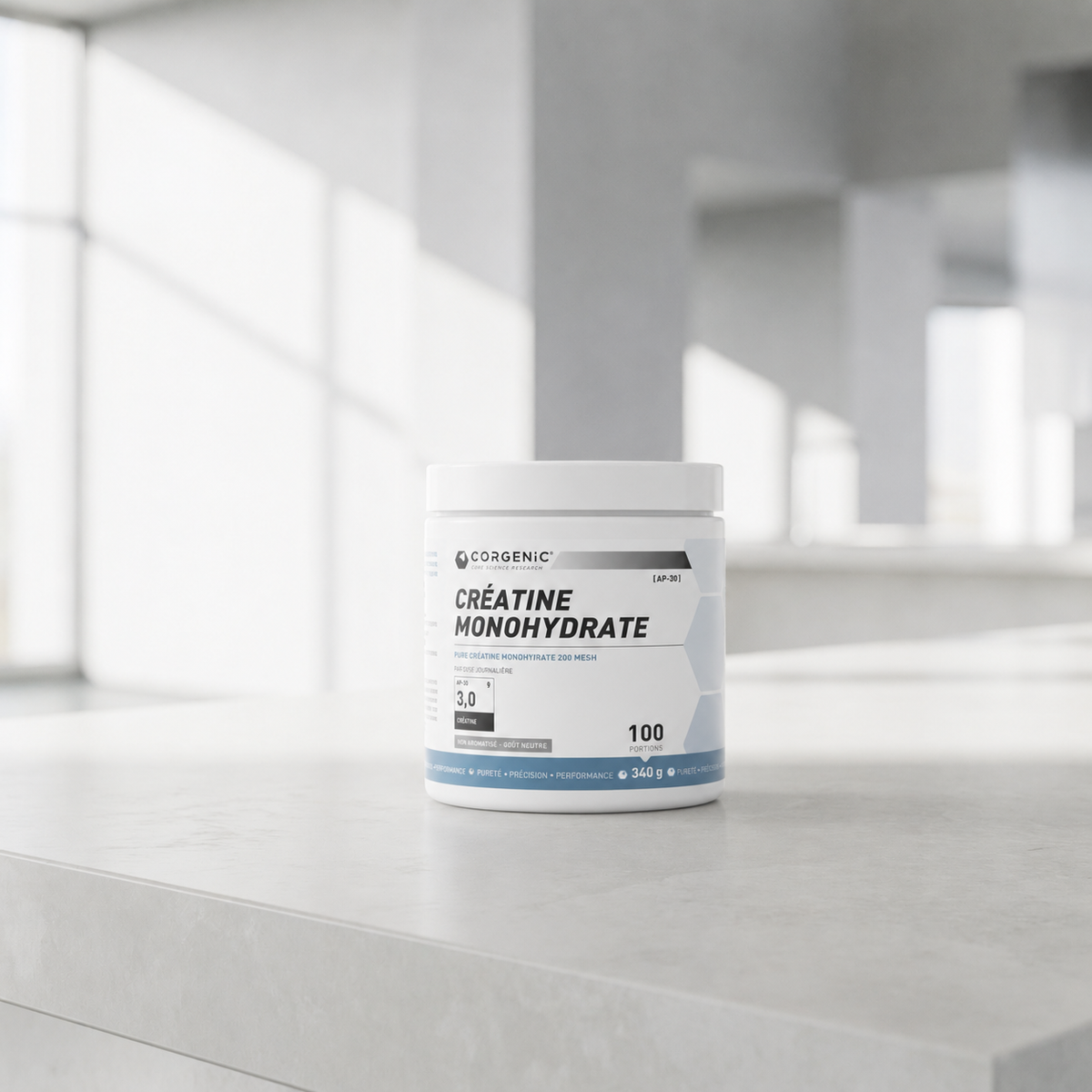
Everything you need to know about Creatine Monohydrate

Creatine improves physical performance during successive bursts of short-term, high-intensity exercise. The product is intended for adults performing high-intensity physical exercise.

The beneficial effect is obtained with a daily intake of 3 g of creatine, which is exactly one serving. No loading phase is required.

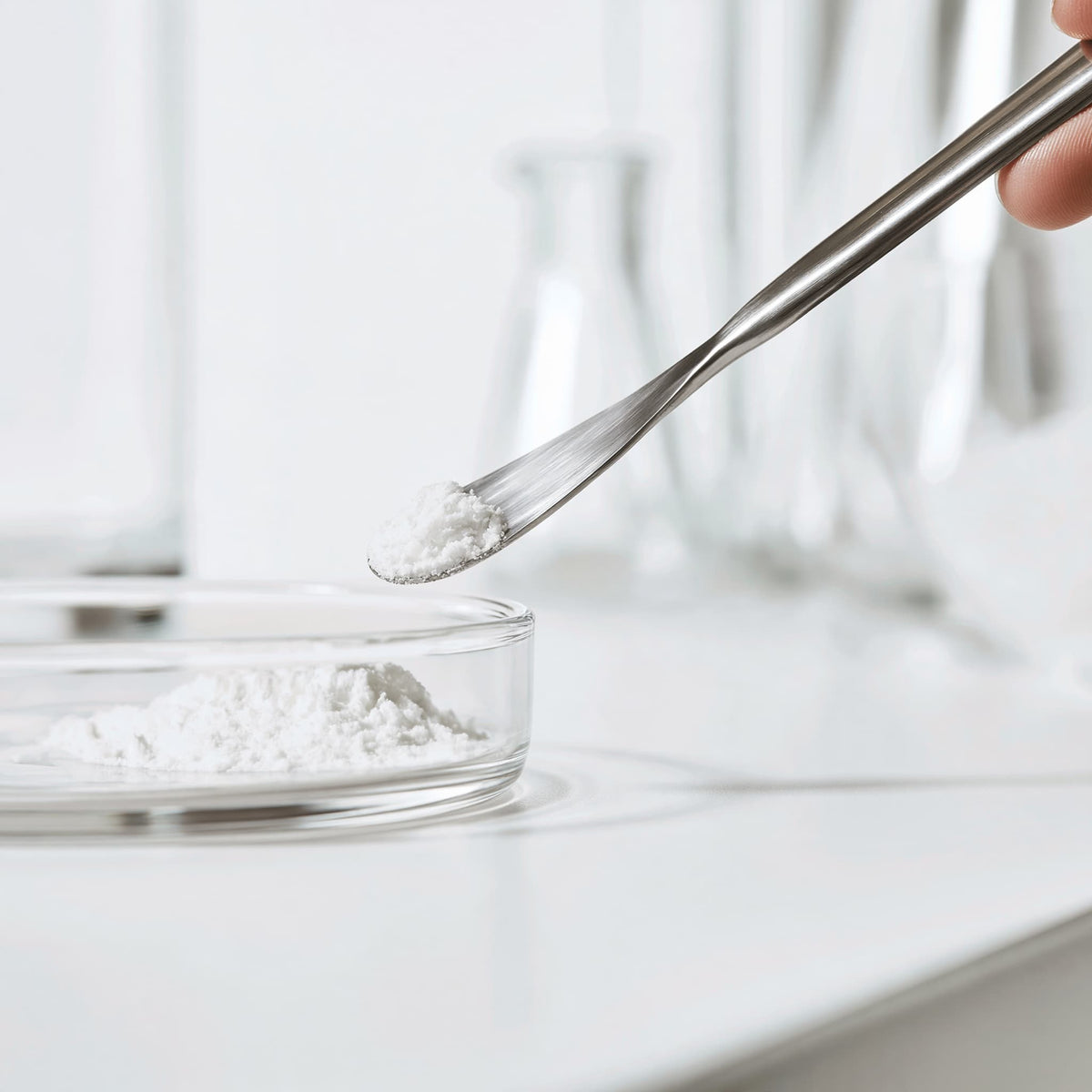
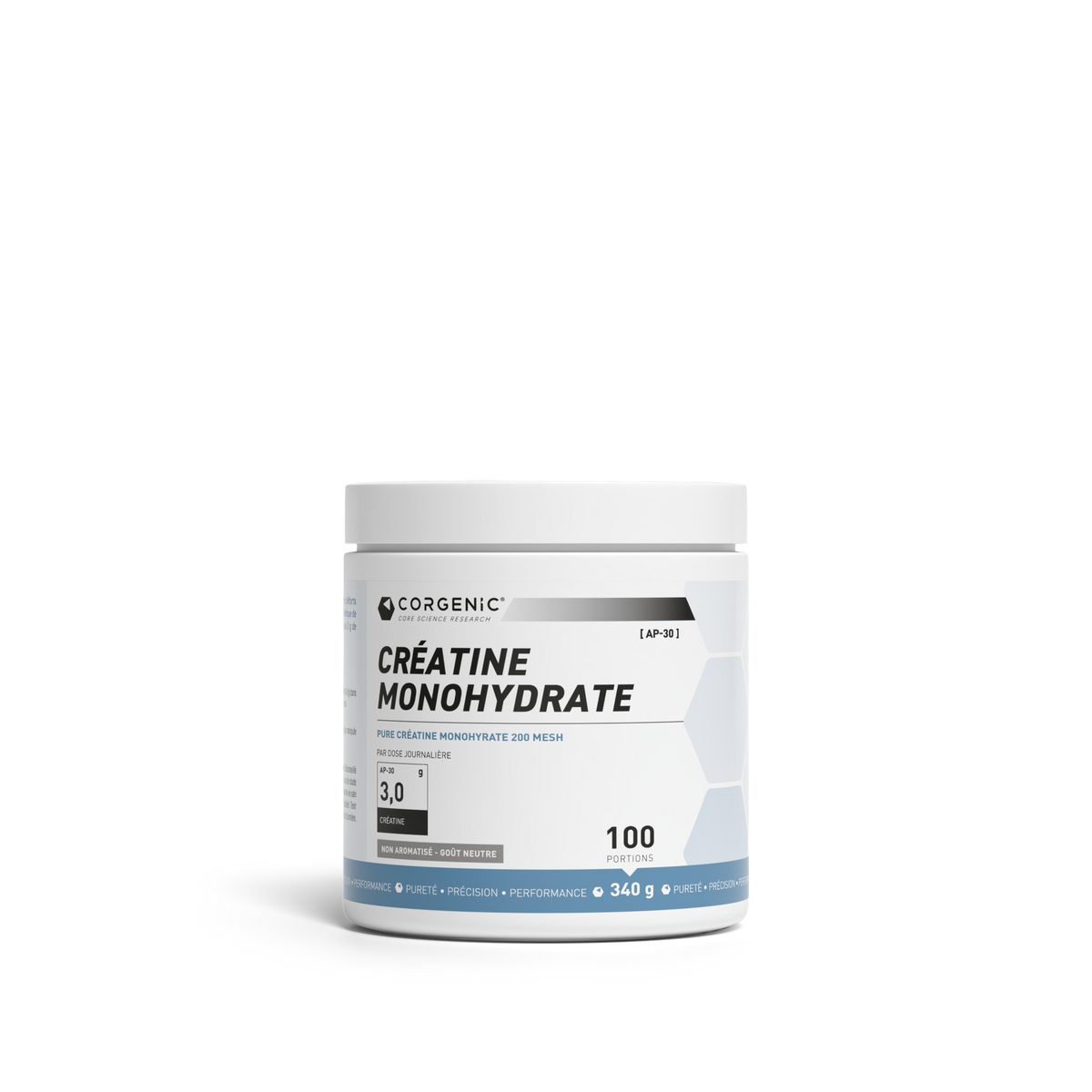
One ingredient only: unflavored creatine monohydrate 200 mesh, to be mixed in 200 ml of water or another beverage.

Benefits

Sustained physical capacity when effort is repeated

Creatine improves physical capacities during successive series of very intense, short-duration exercises. This is the effort profile for weight training in sets, repeated sprints, intermittent intensity sports like football, rugby, or racket sports, and training formats that chain together short, high-intensity blocks.

The recognized dose, achieved in one serving

Each serving provides 3 g of creatine, which is exactly the daily amount for which the beneficial effect is recognized. Regular intake is sufficient: no loading phase is necessary.

Features

What is creatine?

A nitrogenous compound naturally present in the body, with approximately 95% concentrated in skeletal muscle. The body synthesizes some of it from three amino acids—arginine, glycine, methionine—and the diet provides the rest, mainly through meat and fish. The body's store in a 70 kg adult is around 120 g. Creatine monohydrate is the form used for supplementation.

How does it work?

In muscle, creatine coexists in free form and as phosphocreatine. The latter constitutes an immediately mobilizable energy reserve: it participates in the rapid regeneration of ATP, the molecule that directly powers muscle contraction. This system is the main energy provider for high-intensity efforts lasting a few seconds, and it is also the first to deplete when these efforts are repeated. The availability of phosphocreatine therefore conditions the ability to repeat these efforts.

Who is it for?

Adults performing high-intensity physical exercises: weight training, sprinting, intermittent-intensity team sports, and structured short-block training. Dietary intake of creatine comes almost exclusively from meat and seafood products, so vegetarian and vegan diets provide little—this formula is suitable for these diets. Not recommended for children, adolescents, and pregnant or breastfeeding women.

Dosage

Dosage

1 level scoop, or approximately 3.4 g of powder — equivalent to 3 g of creatine.

Preparation

Pour one dose into 200 ml of water or a drink of your choice. Stir, then drink immediately: creatine monohydrate disperses but does not fully dissolve at this concentration, and a slight residue may form at the bottom of the glass. Rinse the glass with a little water to ensure no residue is left.

Frequency

1 serving per day. Do not exceed the recommended daily dose.

Storage

Store in a cool, dry place away from light. Close the container after each use: the powder is sensitive to moisture.

In your routine

Consistency over timing

Take your serving every day, including non-training days. Creatine works through consistent daily intake of 3g, not by being timed with your workout. The timing of intake is therefore secondary: choose a time you won't forget.

Find your anchor point

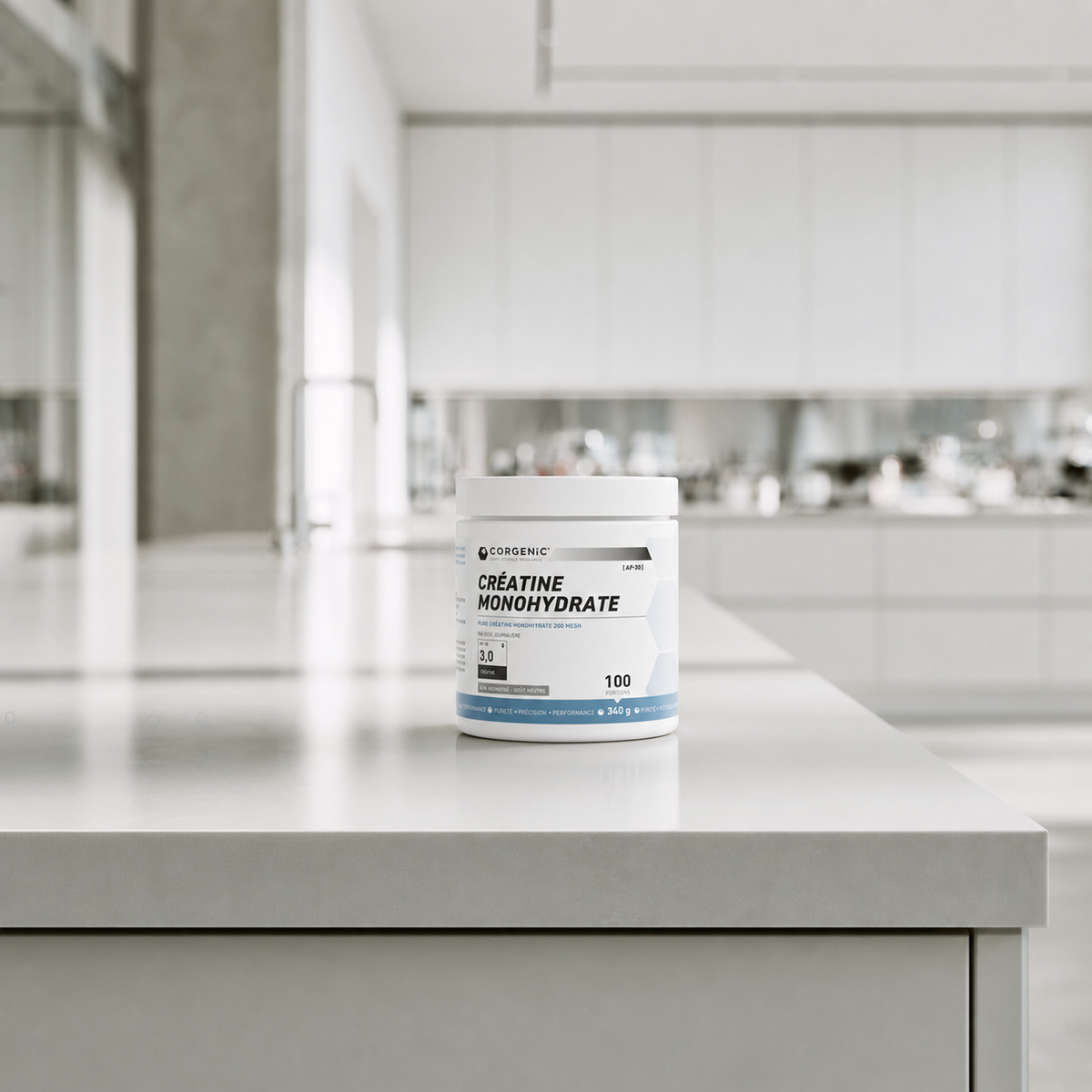
The difficulty with a daily supplement isn't taking it, it's not forgetting it after three weeks. Associate taking it with an already automatic action: your morning coffee, your post-workout shake, your glass of water with dinner. The container placed next to this action is better than the container stored in a cupboard.

Integrates with what you already drink

Flavorless and with no distinct taste, the powder mixes with water, juice, a protein shake, or an energy drink. No dedicated preparation is necessary.

Over the long term

Creatine is taken continuously, without any particular cycles or windows. The question isn't when to start or when to stop, but whether you'll stick with it over time.

Science & Reference

Creatine, phosphocreatine, and energy production

In muscle, creatine is present in free form and as phosphocreatine. Harris et al. observed an elevation of muscle creatine in subjects supplemented with creatine monohydrate [1]. Phosphocreatine constitutes a rapidly mobilizable reserve that participates in the regeneration of ATP—the immediate energy source for contraction—particularly stressed during short, high-intensity efforts [3].

Creatine monohydrate, the reference form

Creatine monohydrate is the most studied form of creatine. The International Society of Sports Nutrition's position considers it the form with the highest level of evidence regarding increased muscle creatine stores and the ability to perform high-intensity exercises [3]. Recent scientific reviews continue to present it as the reference form in supplementation [4].

Performance during short and repeated efforts

A meta-analysis of around one hundred controlled studies highlighted a positive effect of creatine supplementation on performance. The effects were particularly significant for exercises of 30 seconds or less, which are highly dependent on the ATP-phosphocreatine system, and more pronounced during repeated efforts than during a single effort [2].

3 g per day, no mandatory loading phase

A loading phase allows for a rapid increase in muscle stores, but it is not essential. Hultman et al. observed a gradual increase of approximately 20% in total muscle creatine concentration after 28 days at 3 g/day; a similar magnitude of increase was obtained more quickly with 20 g/day for 6 days [5]. Consolidated data confirm that regular daily intake can be used without a loading phase, with the increase in stores simply being more gradual [4,5].

A dosage corresponding to the authorized European claim

European regulations authorize the claim that "Creatine enhances physical performance in successive bursts of short-term, high-intensity exercise." The beneficial effect is obtained with a daily intake of 3 g of creatine, in adults performing highly intensive physical exercise [6].

References

[1] Harris RC, Söderlund K, Hultman E. Elevation of creatine in resting and exercised muscle of normal subjects by creatine supplementation. Clinical Science. 1992;83(3):367–374. doi:10.1042/cs0830367.

[2] Branch JD. Effect of creatine supplementation on body composition and performance: a meta-analysis. International Journal of Sport Nutrition and Exercise Metabolism. 2003;13(2):198–226. doi:10.1123/ijsnem.13.2.198.

[3] Kreider RB, Kalman DS, Antonio J, et al. International Society of Sports Nutrition position stand: safety and efficacy of creatine supplementation in exercise, sport, and medicine. Journal of the International Society of Sports Nutrition. 2017;14:18. doi:10.1186/s12970-017-0173-z.

[4] Antonio J, Candow DG, Forbes SC, et al. Common questions and misconceptions about creatine supplementation: what does the scientific evidence really show? Journal of the International Society of Sports Nutrition. 2021;18:13. doi:10.1186/s12970-021-00412-w.

[5] Hultman E, Söderlund K, Timmons JA, Cederblad G, Greenhaff PL. Muscle creatine loading in men. Journal of Applied Physiology. 1996;81(1):232–237. doi:10.1152/jappl.1996.81.1.232.

[6] European Commission. Regulation (EU) No 432/2012 establishing a list of permitted health claims made on foods — claim concerning creatine.

Why this formulation?

Why creatine monohydrate?Because it is the most studied form, and the only one to which European regulations attach a claim. Alternative forms — HCl, malate, buffered — sell for more without having the same data basis.

Why 3g per day?Because 3g is the quantity for which the effect is recognised in the European Union, and also the maximum daily dose for creatine retained by ANSES. Protocols of 5g and loading phases come from Anglo-Saxon literature, where this framework does not apply.

Why 200 mesh granularity?For a fine powder that disperses homogeneously and is prepared effortlessly.

Why only one ingredient?Because no addition would improve what creatine already does. Enriched formulas are most often used to justify a price, not an effect.

Composition - Full disclosure formula

Ingredient— Creatine monohydrate, 200 mesh particle size
Nature— Nitrogenous compound naturally present in the body, concentrated in skeletal muscle
Role— Creatine improves physical performance during successive bursts of short-term, high-intensity exercise
Dosage— 3.4 g of creatine monohydrate per serving, i.e. 3 g of creatine

Nothing else— The ingredient list is only two words long.

INGREDIENTS:Creatine monohydrate. Manufactured in an environment that processes milk, gluten, soy, fish, and sulfur dioxide.

Nutrition Information
Creatine Monohydrate
Control and Compliance
Usage precautions

Creatine-based food supplement.

Do not exceed the recommended daily dose. Not recommended for children, adolescents, pregnant or breastfeeding women. If in doubt, seek medical advice. This product should be used as part of a healthy lifestyle and not as a substitute for a varied and balanced diet. Keep out of reach of young children. Store in a cool, dry place away from light. Batch number / Best before end: see print on packaging.

Questions you may have

What are the shipping costs and delivery times?

In mainland France, delivery is free for purchases over €25; below this amount, the cost is €6. The estimated delivery time is 3 to 5 business days.

In other served European Union countries, the cost is €9 per order. The applicable delivery time is indicated when you confirm your order, depending on the destination country. Available destinations are displayed when you enter your address.

Shipments are handled by Colissimo, Mondial Relay, or DPD. Available methods and their final cost are presented to you before payment. → [See the Delivery page]

How do I track my order?

After validation, you will receive an email confirming that your order has been taken into account. Upon shipment, a second email will provide you with tracking information if the chosen delivery method includes it.

In case of unusual delay, please write to us at hello@corgenic.com stating your order number: we will check the situation with the carrier and advise you on the steps to follow.

Can I modify or cancel my order?

Orders are quickly sent to our logistics center for preparation. Please write to us as soon as possible at hello@corgenic.com with your order number: if the order is not yet being prepared, we will do our best to modify or cancel it.

Once the order has been shipped, it can no longer be modified. You then have a 14-day right of withdrawal from the date of receipt.

How do I return an item or exercise my right of withdrawal?

You have 14 days from receipt of your order to inform us of your decision to withdraw, without having to justify it. Use the withdrawal feature accessible on the website, or write to retour@corgenic.com specifying your order number and the products concerned. Simply returning a product without declaration is not sufficient.

You then have 14 days to return the products to us; direct return costs are at your expense. Reimbursement will be made no later than 14 days after receipt of your return or proof of its dispatch, using the original payment method.

For hygiene and health protection reasons, the right of withdrawal cannot be exercised on products unsealed after delivery – please check your order before opening a product you may wish to return. This exclusion does not apply to a defective or non-compliant product.

What should I do if my order is incomplete or damaged, or if a product is defective?

Contact hello@corgenic.com, providing your order number, the product(s) concerned, and the nature of the problem. If possible, include photos of the package, its packaging, and the product, and keep the packaging until your request is processed.

Our team will review the situation and advise you on the appropriate solution. If the return is made under the legal guarantee of conformity, it will be handled free of charge for you.