

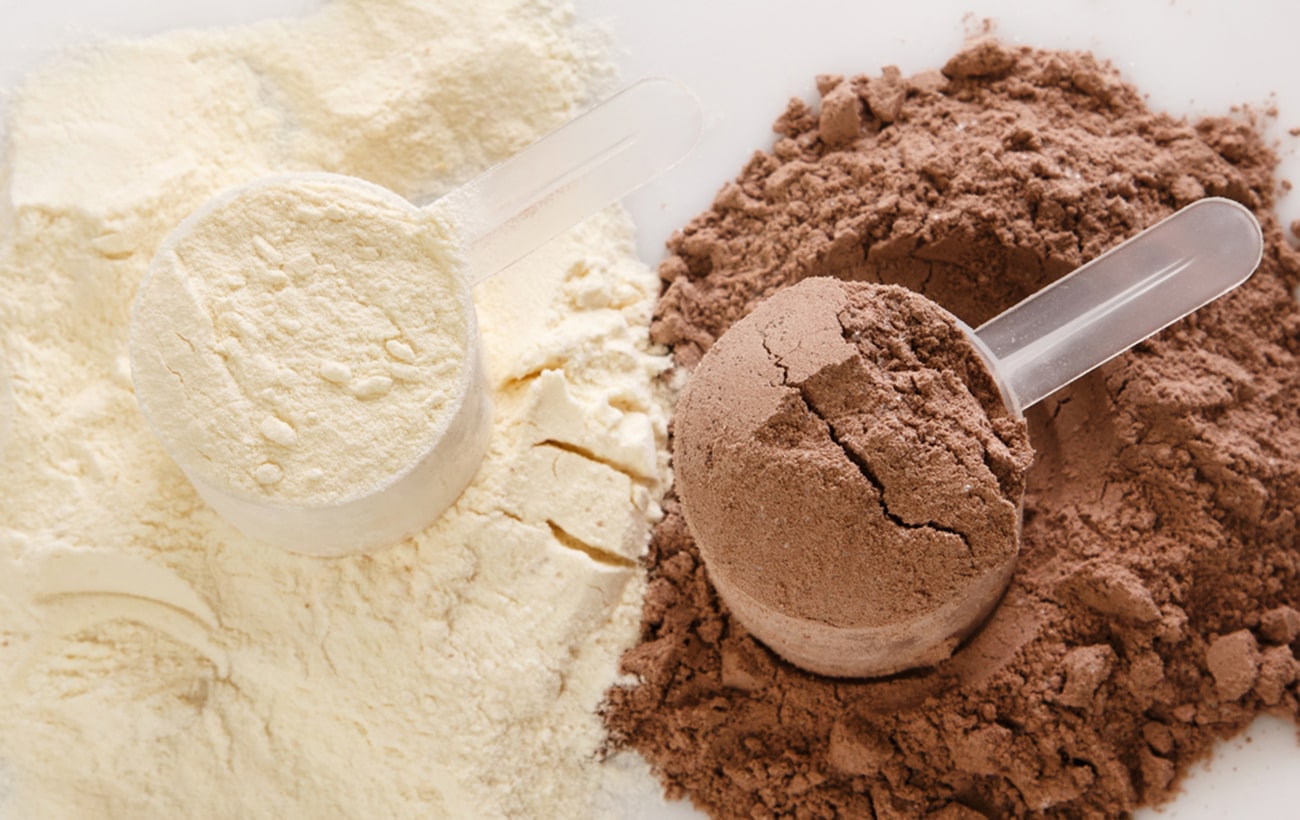
For some time now, we've been hearing about so-called "native" whey. The term "native" refers to the original, natural, unmodified nature of milk proteins, and in particular whey, in order to differentiate these "native" proteins from other proteins. This term originated within the production processes of certain European producers of ingredients for the dairy industry (and therefore, among other things, whey), and was subsequently adopted and used as is in the market for the proteins that this industry supplies. The term was thus initiated by dairy ingredient producers themselves. Once it reached the market, it became necessary to explain what differentiated this so-called "native" protein from other proteins. With social media helping, and everyone using their own platform to add their expertise, we hear all sorts of conflicting opinions about this type of protein, rightly or wrongly proclaimed "native." In any case, it's clear that the widespread, chaotic discourse on this subject doesn't help to clarify the situation. We hear talk of dairy whey versus cheese whey, waste, and residues… Many blogs address the topic, compiling approximations and hasty conclusions, leading one to legitimately wonder what the real purpose of all the fuss is. But when discussing the native nature of a protein, it's important to remember that this encompasses both a technical and scientific aspect, as well as a regulatory one. So, is "native" truly the right term? Is it a marketing ploy or a genuine benefit? Let's shed some light on the matter.
Carbohydrates that are quickly absorbed have a high glycemic index, carbohydrates that are slowly absorbed have a low glycemic index.
The glycemic index of a carbohydrate is measured relative to that of glucose, which is 100 and is the simplest sugar most easily and quickly assimilated by the body.
A glycemic index of 50 for a carbohydrate means that the increase in blood glucose for that carbohydrate corresponds to 50% of the blood glucose that would have been obtained with glucose.
Low GI foods are considered to have a GI below 50, and high GI foods are considered to have a GI above 70.
The body's response to increased blood sugar is the production of insulin, which serves to regulate blood glucose levels and convert sugars into fats.
People who regularly consume high-glycemic index foods are more prone to diabetes, cardiovascular disease, and being overweight. Those who consume low-GI foods tend to have better weight control and are less susceptible to metabolic sugar disorders such as diabetes.
Name and regulatory aspects
First and foremost, it's important to clarify the correct terminology. Cow's milk contains two types of protein: caseins and whey proteins. Caseins are the most abundant, representing over 80% of milk proteins. They are present in milk as insoluble micellar suspensions. Whey proteins, unlike caseins, are soluble in the aqueous phase of milk and represent 20% of milk proteins. Due to their biochemical composition, whey proteins are easier to digest than caseins, have a better essential amino acid profile, and are more readily absorbed.
"Whey" is the literal English translation of "lactoserum." Whey is the liquid remaining after the caseins have been separated by coagulation. Traditionally in the cheese industry, the caseins coagulated by the enzymatic action of rennet are called "curd," and this is what is used to make cheese. The whey separated from the caseins contains whey protein, which is extracted by filtration, then dried and packaged to produce the product consumed in sports nutrition. That's the traditional explanation. It's important to keep in mind that on one hand, you have coagulated caseins, and on the other hand, you have whey. At this stage, from a regulatory standpoint, there are no other terms besides those mentioned above that are validated by any regulations.
So we asked the producers of the ingredients directly: On what regulatory or technical criteria can a protein be designated as "native," thereby implying that others are not? Their response: "We call it 'native' because we filter the whey from the milk without going through the casein separation phase by coagulation. Whey labeled 'native' thus offers a superior leucine profile."
While they explain the technique used and the relative advantage in terms of leucine concentration, the "native" character, which everyone understands to refer to original biological quality, is more unclear. They explain that there's a legal loophole regarding the designations of other dairy industry co-products, and that this product is called "native" because of the method, without explaining its biological significance in terms of the original, unmodified character of the whey proteins obtained—which they nevertheless imply, compared to the traditional whey they also produce.
The recent concept of so-called "native" protein is based on the principle of extracting whey proteins (solubilized proteins from whey) by direct filtration from whole milk, before the casein coagulation phase, thus without prior casein separation. This is based on the assumption that casein coagulation denatures whey, resulting in a cheese protein, as opposed to the so-called "native" milk protein obtained by direct filtration of whole milk. Traditional whey would therefore be considered a byproduct of cheesemaking. However, numerous non-denaturing casein coagulation techniques now exist, just as there are numerous whey protein filtration techniques. How can all whey proteins that are not produced by filtration before casein coagulation be automatically labeled as "denatured"?
This is simplistic. For several decades, food processing techniques have evolved considerably to enhance the value of whey and transform it into a high-value product. Traditional whey, in its modern form, now possesses a very high biological value, with a remarkable essential amino acid profile. Let's briefly consider this. It is used in infant and medical nutrition, serving to feed newborns and individuals with digestive, metabolic, or immune disorders. It is also used in geriatrics for terminally ill patients, in post-operative nutrition, and for those who can no longer eat naturally. Do you believe that if it were denatured, it would have such nutritional or medical applications? Of course not. To say today that modern whey is denatured or a waste product is simply wrong. Fifty years ago, whey was a by-product of the cheese industry, but today, curd has become a co-product of the whey production process due to the explosion in demand. To say that traditional whey is a waste product of the cheese industry today is to look back to the 1960s. But what about the so-called "native" protein obtained by direct filtration of whey proteins without separating the caseins?
Scientific aspects
Because ultimately, that's what it comes down to: when we talk about "native" proteins, we're actually referring to the separation technique between whey and caseins. So, is it even better to filter directly through "whole" milk? Well, that depends on whether you want to obtain casein or whey protein. Indeed, the system of separating whey and caseins by filtering directly through milk produces micellar casein, which is far superior to calcium caseinates. If the goal is to obtain micellar casein, we could simplify things and say that so-called "native" whey is a byproduct of micellar casein production. This is the same logic as saying that traditional whey is a byproduct of cheesemaking. Which, as we saw earlier, is nonsense. That said, while modern casein coagulation techniques are non-denaturing for whey, the technique of filtering whey directly from milk offers an advantage. For whey proteins, this technique allows for a slightly higher leucine concentration. A recent scientific study from 2017 (1) conducted by Norwegian researchers shows that so-called "native" whey increased blood leucine concentrations more than WPC-80 and milk, but despite the greater increases in blood leucine concentrations with so-called "native" whey, it was not superior to WPC-80 in terms of its effects on muscle protein synthesis during a 5-hour period following the end of exercise.
Furthermore, the term "native" in the sense of "original" or "unmodified" is not appropriate. The fragile original structure of whey proteins is altered from the very first mandatory milk treatments, such as flash pasteurization, necessary to kill pathogenic germs, and mechanical homogenization, required before any filtration. Thus, another scientific study from 2015 (2) examining the effect of homogenization and pasteurization on the structure and stability of milk shows that in both cases—homogenization alone and followed by HTST treatments (72°C for 15 seconds)—the tertiary structure of whey proteins was disrupted due to the homogenization of whole milk, as indicated by both near-UV circular dichroism and intrinsic fluorescence. In-depth structural stability analyses revealed that, while milk processing had little impact on secondary structural stability, the tertiary structural stability of whey protein was significantly altered, without, however, denaturing its intrinsic biological value. In other words, the "native" protein is no longer truly "native" in the "original" sense.
Share:
The importance of potassium