

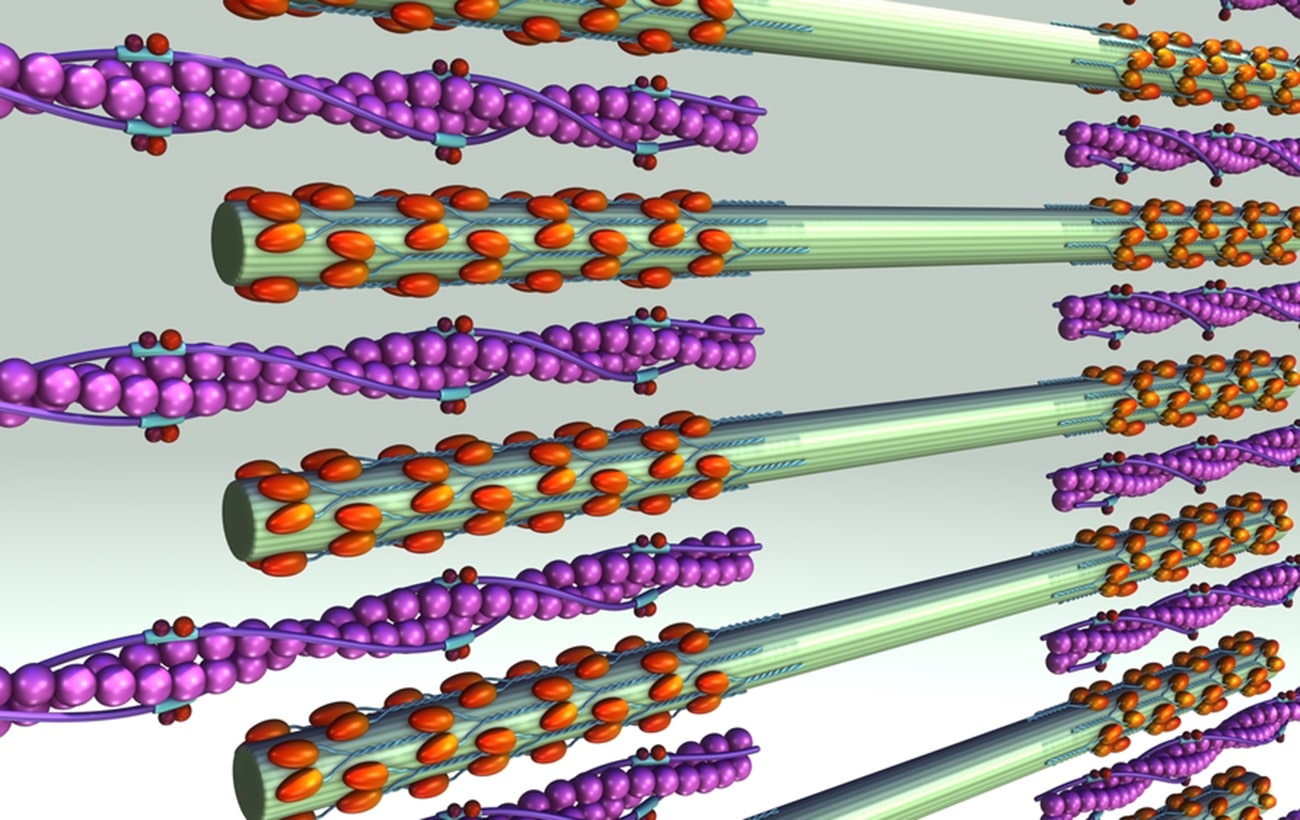
The importance of potassium and calcium in muscle contraction
Electrolytes are often overlooked when discussing athletic performance in the fitness and bodybuilding fields. Indeed, it's much easier to find information on the stimulating effects of caffeine or creatine, ingredients in some performance-enhancing supplements, than to find recommendations on maintaining the correct electrolyte balance and how to consume them. Yet, electrolytes are essential, and their role in muscle function is far more important than the mere status of accessory minerals to which they are often relegated in the public consciousness.
Carbohydrates that are quickly absorbed have a high glycemic index, carbohydrates that are slowly absorbed have a low glycemic index.
The glycemic index of a carbohydrate is measured relative to that of glucose, which is 100 and is the simplest sugar most easily and quickly assimilated by the body.
A glycemic index of 50 for a carbohydrate means that the increase in blood glucose for that carbohydrate corresponds to 50% of the blood glucose that would have been obtained with glucose.
Low GI foods are considered to have a GI below 50, and high GI foods are considered to have a GI above 70.
The body's response to increased blood sugar is the production of insulin, which serves to regulate blood glucose levels and convert sugars into fats.
People who regularly consume high-glycemic index foods are more prone to diabetes, cardiovascular disease, and being overweight. Those who consume low-GI foods tend to have better weight control and are less susceptible to metabolic sugar disorders such as diabetes.
But what exactly is an electrolyte?
An electrolyte is a chemical compound containing mobile ions that acts as a conductive substance. They are generally found in solution (dissolved in water), but molten and solid forms also exist. For example, solid sodium chloride dissolves in water into Na+ (sodium ion) and Cl- (chloride ion). Once in solution, these electrically charged particles act as conductors and are responsible for numerous biochemical reactions.
Electrolytes play a vital role in the body. They regulate the body's pH, help maintain normal blood pressure, and are involved in muscle function and the functioning of the nervous system. Each has its specific role, and without them, the body cannot function. Yet, the body regularly loses significant amounts of electrolytes, even through perspiration alone. Fortunately, a balanced diet and proper hydration allow the body to replenish its electrolytes.
And what about muscle function?
Because ultimately, that's what it comes down to: when we talk about "native" proteins, we're actually referring to the separation technique between whey and caseins. So, is it even better to filter directly through "whole" milk? Well, that depends on whether you want to obtain casein or whey protein. Indeed, the system of separating whey and caseins by filtering directly through milk produces micellar casein, which is far superior to calcium caseinates. If the goal is to obtain micellar casein, we could simplify things and say that so-called "native" whey is a byproduct of micellar casein production. This is the same logic as saying that traditional whey is a byproduct of cheesemaking. Which, as we saw earlier, is nonsense. That said, while modern casein coagulation techniques are non-denaturing for whey, the technique of filtering whey directly from milk offers an advantage. For whey proteins, this technique allows for a slightly higher leucine concentration. A recent scientific study from 2017 (1) conducted by Norwegian researchers shows that so-called "native" whey increased blood leucine concentrations more than WPC-80 and milk, but despite the greater increases in blood leucine concentrations with so-called "native" whey, it was not superior to WPC-80 in terms of its effects on muscle protein synthesis during a 5-hour period following the end of exercise.
Furthermore, the term "native" in the sense of "original" or "unmodified" is not appropriate. The fragile original structure of whey proteins is altered from the very first mandatory milk treatments, such as flash pasteurization, necessary to kill pathogenic germs, and mechanical homogenization, required before any filtration. Thus, another scientific study from 2015 (2) examining the effect of homogenization and pasteurization on the structure and stability of milk shows that in both cases—homogenization alone and followed by HTST treatments (72°C for 15 seconds)—the tertiary structure of whey proteins was disrupted due to the homogenization of whole milk, as indicated by both near-UV circular dichroism and intrinsic fluorescence. In-depth structural stability analyses revealed that, while milk processing had little impact on secondary structural stability, the tertiary structural stability of whey protein was significantly altered, without, however, denaturing its intrinsic biological value. In other words, the "native" protein is no longer truly "native" in the "original" sense.
Share:
Protein pancakes
An update on so-called "native" whey protein