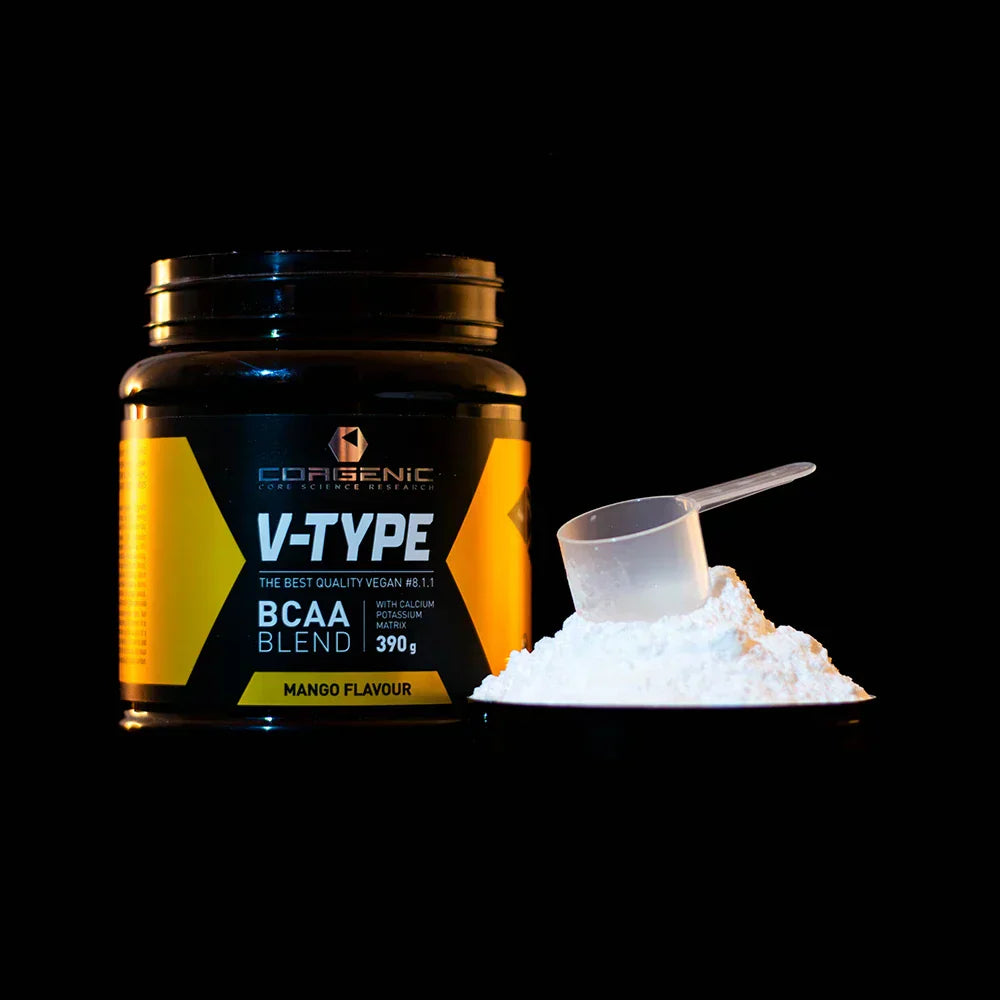
BCAA is an acronym now well-known to athletes, particularly bodybuilders, derived from the English term "Branched Chain Amino Acids." BCAAs are essential amino acids, meaning the body needs them to function and cannot synthesize them. Therefore, it is necessary to obtain them ideally through diet, or through supplementation in cases of increased need.
BCAAs are part of the spectrum of existing amino acids. But what exactly are amino acids?
Amino acids are molecules that, when combined in chains, form proteins. There are a total of 20 amino acids that make up the proteins in the human body. In a way, they are the building blocks of a wall. Amino acids thus enable protein synthesis. Proteins are essential to the body; they play a structural role (in muscles and skin) but are also involved in numerous processes such as the immune response (antibodies), oxygen transport in the body (hemoglobin), and digestion (digestive enzymes).
That being said, which amino acids are considered essential?
There are nine essential amino acids: methionine, lysine, tryptophan, phenylalanine, threonine, valine, leucine, isoleucine, and histidine. The other amino acids are non-essential.
And what about BCAAs in all of this?
BCAAs are among the essential amino acids, which are themselves part of the twenty total amino acids in the natural spectrum of amino acids found in human body proteins. There are three BCAAs: leucine, isoleucine, and valine. These branched-chain amino acids are highly effective in muscle protein synthesis. They also improve recovery. Therefore, they can be used as supplements to support muscle metabolism alongside a sustained and regular exercise routine.